
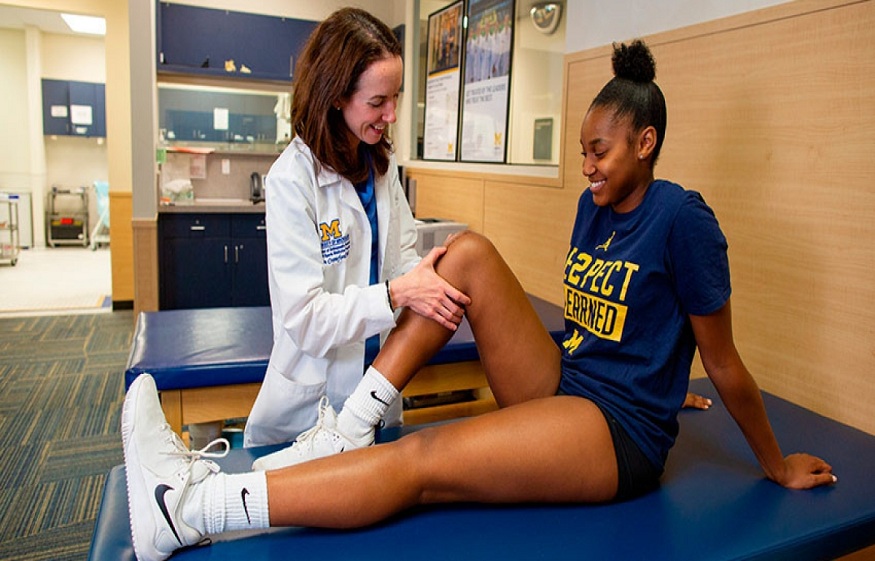
Theme 4: Sports medicine

It is not our intention to study the organization of sport in European universities, a subject certainly analyzed by others. We simply wish to mention here the evolution of the aspirations of sports practitioners which has led to different practices and which has involved equally different “medical demands” or “health demands”. Schematically, it is possible to distinguish two kinds of motivation: -motivation for “free” practices which are based on the pleasure of exercise, of play, individual or collective, in which the level of performance is secondary. In this context, maintaining (or even restoring) health is the priority sought; -the motivation for “competitive” practices which are based, on the contrary, on the intense desire to achieve a performance in a given specialty. In this case, performance is the basis of everything. In particular, it justifies the establishment of a training program aimed at systematically improving performance. We understand that this type of practice can interest any athlete, regardless of their age.
In this framework, health is no longer experienced as an objective but as the means to achieve its goal.
In the first case, the doctor, most often associated with the idea of illness (poor health), is excluded from the practice system, hence the need to establish the conditions for real dialogue: education and information practitioners and training of sports doctors. In the second case, the medical demand is greater: care to remove (immediately) any obstacle to achieving a performance, evaluation and contribution to the development of training. This importance of the request does not go without posing problems, in particular when the doctor appears to be the one who obstructs the achievement of the goal (prescription of rest), and it thus justifies the need for the dialogue mentioned above.
As such, the university context could, in all cases, be an eminently favorable situation for the establishment of this dialogue, particularly with regard to the education of practitioners (interest, limits of the medical act) and training doctors (knowledge of the aspirations of practitioners, of sporting activities, that is to say contact with the field). However, other conditions, external to the institution, must also be met and in particular recognition of preventive medicine. We also find here one of the missions of medicine, in general, at the University.
The concept of sports medicine
Today, health represents one of the essential concerns, both for the individual and for society. Given advances in medicine, the main causes of morbidity and mortality in our countries are represented by so-called diseases of civilization, of which sedentary lifestyle represents a very important factor. There are numerous studies on this subject, both in Europe and in North America, and highlight the benefits of physical activity. We should therefore not be surprised to note that many countries have sought to develop the practice of APS among their populations and, in this way, we can affirm the role of the organization of sport at the University, the place of education if there is one. However, we must not forget that the practice of APS, however beneficial it may be, can represent, in itself, a factor of morbidity, especially when it is carried out without any supervision, any advice (pedagogical, technical , medical…). Here we find the need for education and dialogue among all agents interested in this practice and, once again, the need for a situation favorable to their implementation within Universities.
Taking into account these considerations, it is obvious that, for sports medicine, one of the important areas of its action is prevention. This is the case, for example, for determining the level of aptitude of the subject which it is important to know in order to adapt the nature of the activity, the conditions of practice, to it. Furthermore, the preventive approach will be all the more rigorous if there are risk factors linked to the subject, the activity, the practice conditions (intense training, for example). Here again, given the context, sports medicine has a large place in the organization of sport at the University.
Read More: The team behind the team: sports medicine serving the Brazilian Olympic quest
The situation in Europe
In order to promote the practice of APS, many countries have sought to develop the sports medicine sector, both in terms of the training of professionals and the establishment of structures integrating prevention, care, teaching, application and research.
Despite this development effort, it is difficult to collect precise data on the subject. However, in view of some elements of various surveys, it seems that the conception of the organization of medicine depends on that of sport. In countries where there is a highly developed university sport, sports medicine occupies a large place at the University as is the case in the USA. On the other hand, it is not the same when sports management is fragmented. in multiple clubs and associations.
The methods of practicing medicine also play a role: private practice involves a method of private financing and often results in a lack of coordination of actions (let us cite Denmark and Sweden). Conversely, a “nationalization” of health leads to an integration of sports medicine at all levels, directed and hierarchical.
We must also note the influence of national health policy. A priority for preventive medicine leads to the integration and consideration of sports medicine in its own right by the Ministry of Health. The failure to take charge of preventive actions by social organizations greatly reduces the possibilities for practicing sports medicine within the liberal framework.
If the sports movement is the main one interested in sports medicine, it is surprising to note that its participation very often remains limited (it seems that only the Italian Olympic Committee gives it a special place), mixed budgeting, State/power sporty being most often the rule. However, we can note in some countries (such as Sweden) the very advanced training in physiology of sports educators and coaches, which allows them to participate directly in functional explorations of training monitoring and facilitates the establishment of dialogue already evoked.

