The team behind the team: sports medicine serving the Brazilian Olympic quest

Olympics.com spoke with doctors Leonardo Hirao and Felipe Hardt about the fundamental role of cutting-edge sports medicine and its performance-enhancing application in the quest for Olympic gold ahead of the Games Beijing 2022 Winter Olympics.
It is impossible to separate sports performance from the athlete’s body.
While the proper functioning of the body is important for everyone, high-level athletes need a certain level of overall physical fitness to achieve their best performances. It is the same for all sporting disciplines, whether on athletics tracks, on stadium lawns or on the floors of sports halls, and of course on the snow and ice of the winter Olympic disciplines. Also.
In recent years, sports medicine has made such progress that it is now an integral part of the technical functioning of sports teams.
The Beijing 2022 Winter Olympics are only a few months away and it is exactly ahead of this type of major event that the prowess of sports medicine is most in demand and influential. How to avoid injuries and pain? This is probably the most common question when a competition approaches. Or: if I hurt myself or feel pain, how can I best treat it?
In this new episode of our series “The team behind the team”, Olympics.com spoke with Leonardo Hirao and Felipe Hardt, the doctors of the Brazilian Olympic team, who will be alongside the athletes during the Beijing Olympics 2022 from February 4 to 20.
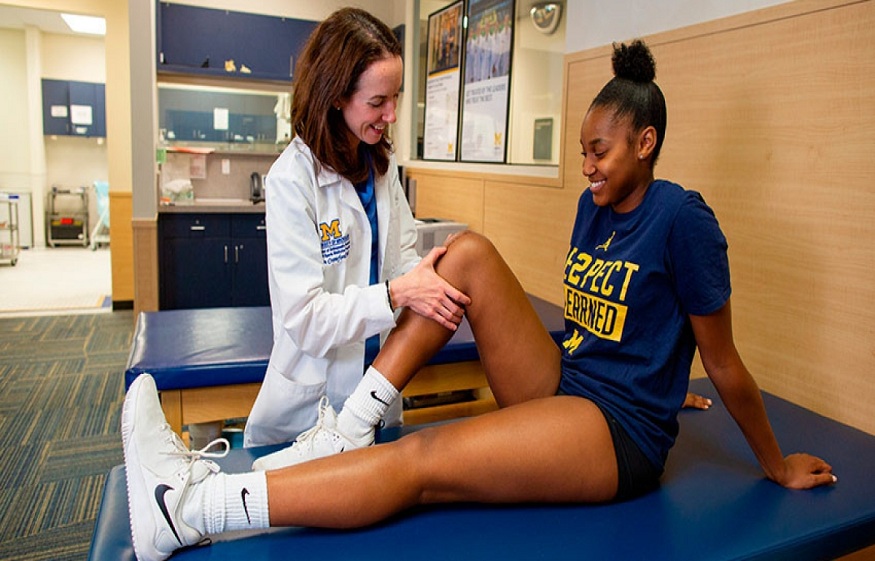
An athlete from the Brazilian Olympic team during medical treatment. Photo: Brazilian Olympic Committee
An athlete from the Brazilian Olympic team during medical treatment. Photo: Brazilian Olympic Committee
Leonardo Hirao: “Every hundredth counts”
A former swimmer at a major club in his hometown of São Paulo, Hirao chose to thrive in medicine rather than in swimming pools. He did specialized studies in sports medicine at the University of São Paulo during the first decade of the 21st century.
“I love everything about sports medicine and the high performance environment, I can’t explain how much I love it. From the first day and throughout my studies… Being in this universe is really a pleasure for me,” explained Hirao.
The ultimate goal of a sports doctor is to prevent injuries, but obviously, sport being what it is, this is not always possible.
“It is possible [to avoid injuries] when we can identify the factors that cause an injury. It starts with training the athlete,” Hirao said. “Prevention begins first with coaches and physical trainers. The doctors only arrive afterwards, but they are very busy researching and identifying the causes of the injuries. »
View this post on Instagram
Leonardo has worked with many athletes in extreme conditions. He remembers an athlete with tendon problems during an Olympic selection. He then proposed a solution to relieve his pain during the competition.
“Every hundredth counts,” Hirao explained to this athlete. He didn’t think he was saying that well… On the finish line, this athlete achieved the Olympic minimum by one hundredth of a second. “It’s a question of details,” he concluded.
Read More: The team behind the team: sports medicine serving the Brazilian Olympic quest
This is the essence of high performance. These little details that make you win or lose a medal. The decisive advantage is sought on a day-to-day basis. This is why it is very important to work on acclimatization both in terms of climate and time difference, during major competitions.
Medical monitoring may become more important than an intervention as such.
Doctors are constantly analyzing biomechanics and biochemical markers to determine whether an athlete is responding well to a training session. Through this, the team as a whole can know whether to lower the pace or if there is a window to increase training intensity to improve results.
The medical team around Leonardo Vial Tercariol during the Tokyo 2020 Olympic men’s handball tournament.
The medical team around Leonardo Vial Tercariol during the Tokyo 2020 Olympic men’s handball tournament.
Nowadays, sports medicine takes a holistic approach. It is no longer just a matter of identifying injuries, making diagnoses, carrying out examinations and establishing a recovery procedure. This is an outdated approach. It is much more than just a surgical procedure. Follow-ups and support are crucial. It is a holistic approach in which everyone works together.
“We work together with our colleagues around the world. It is essential to do this work together and to combine the physical and mental preparations of athletes,” explained Hardt.
For the Brazilian doctor, also a graduate in sports medicine at the University of São Paulo, it is essential to work together and use scientific research and high performance methodologies on a daily basis to implement concrete solutions and contribute to the monitoring, preparation and performance of an athlete. “The ideal is to go beyond injury and orthopedic problems to focus more on sports science. »
Hardt was born in Joinville, Santa Catarina, Brazil, and has been part of the Brazilian Olympic Committee’s team of doctors since 2013. He is so passionate about what he does that he can’t help but analyze the minute details related to his profession when watching sports. “It’s complicated to do without it,” he admitted. “I always have a professional eye and I analyze everything. I do it naturally. »
For Hardt, the recent development of Brazil’s results at the Olympic Games, both summer and winter, is of interest to the medical teams. “Now we are able to monitor everything very early and daily,” he began. “Today, we do very few operations without knowing in advance what the athlete’s situation is. »