
Dental veneers: what advantages and disadvantages?

With age, due to bad habits or accidental accidents, the appearance of the teeth deteriorates. They can lose their color and shine, turn yellow, blacken, move, wear and even chip or break. If you can’t even smile anymore, you might want to consider getting dental veneers. These very fine blades are the magic formula of many celebrities and are very fashionable in France and Europe. There are many different models. The price of dental veneers varies greatly depending on: the material and the purpose of use. In the rest of this article, discover the advantages and disadvantages of dental veneers, and find a perfect smile!
What are dental veneers and what are they for?
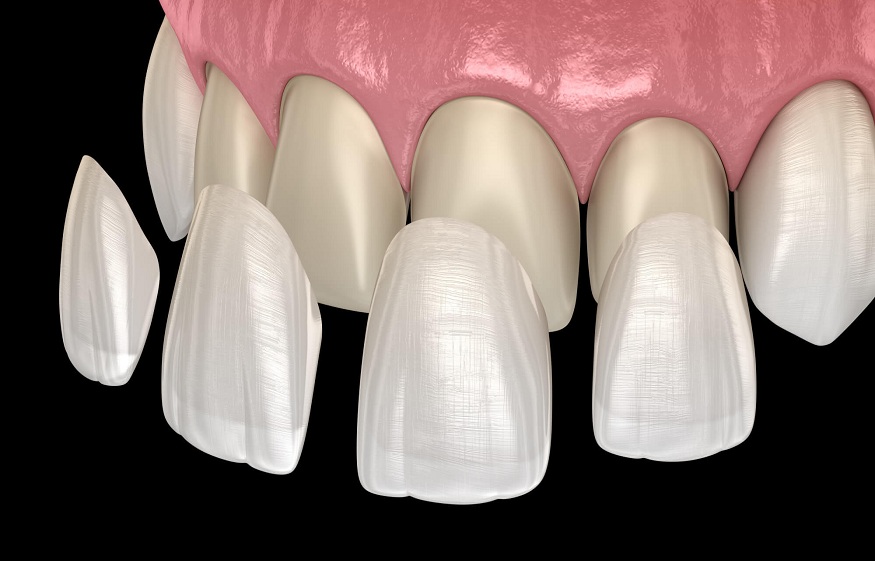
Dental veneers are thin strips that are placed at the front of the teeth. Their goal is to improve the appearance of the tooth and make the smile more beautiful, brighter and more radiant. They correct the color of teeth, improve their shape or any type of aesthetic defect present in their structure.
This is why they are also called aesthetic veneers. They can be placed on a single tooth or multiple teeth, depending on the case. They are custom made and look like part of the teeth themselves. They are used for image reasons: to obtain a pretty smile. But let’s see in which situations dental veneers in Toulouse may be necessary.
Tooth color change
Bad habits and the genetic burden of the teeth, tend to be a cause of darkening of the dentin. Additionally, an adult patient’s tooth becomes darker, a matter of the age of the tooth. Chewing itself and external factors, which alter the tooth, will force the pulp to defend itself by producing tertiary dentin, which has a darker color. The teeth will therefore display a yellowish or opaque color. Often, traditional tooth whitening is not effective in restoring white teeth, so dental veneers may be a better choice.
Read More: Cosmetic dental surgery
Change tooth shape
Many people have very small teeth or teeth that are irregularly shaped, making it difficult for them to smile naturally. Dental veneers are one mechanism to address this problem, with a minimally invasive procedure. In the event that one or more teeth are broken, it will also be necessary to consider the installation of a dental prosthesis and a dental crown so that the result is more aesthetic.
Improve tooth alignment
Cosmetic veneers are a way to straighten teeth without having to place brackets, as long as the occlusion allows. In addition, they are used to correct spaces or diastemas. In these cases, veneers are not recommended in children, as it is best to resolve the problem with orthodontics. Dental veneers are mainly suitable for adults.
Edit damage from bruxism
Bruxism is a common occlusal trauma. Long-term loss of enamel and even dentin often occurs in more severe cases. Aesthetic veneers can modify or repair the damage caused by this habit.
Read More: Choose the ideal treatment for your skin at the right time
Cover defects
After removing the brackets, some patients may notice defects in their teeth. Remains of cement from the brackets may be found, some of the enamel may also have been removed, which causes a lot of sensitivity and pain. The veneers act as a protective barrier in this specific situation and help cover defects.
How much do dental veneers cost?
The price of dental veneers varies greatly depending on the type of material used, quality, duration, and process used for the treatment. For a composite dental veneer in France, it costs between 250 and 500 euros, and for a ceramic (porcelain) dental veneer between 800 and 1,400 euros.
What are the different types of dental veneers?
There are two types of dental veneers, porcelain and composite.
Porcelain (ceramic) dental veneers
Porcelain dental veneers are custom-made in a laboratory and then placed on the teeth. They require a lot of work so their price is more expensive. Also their quality is much higher, they are more durable and require less maintenance. The aesthetic result in terms of brightness and color is much closer to the natural smile.
Composite dental veneers
The composite is made on a plaster or silicone model. The tooth is previously treated with an acid, which generates microporosities in the enamel, so that the adhesive can penetrate well. The acid should act for 15 seconds before being washed off. Finally, an adhesive (for dental use) is used to apply the composite resin layer by layer. The same material is used as for the fillings. The price of composite veneers is therefore cheaper. Then they are given the shape of the tooth, placing layers of resin which polymerize (each layer is hardened with a special lamp). Thanks to the final polishing of the resin, the micropores are smoothed. This gives a natural shine to the resin.
What are the advantages and disadvantages of dental veneers?
The benefits of dental veneers are numerous. To begin with, they offer a very natural finish while providing whiteness, shine and transparency to achieve a perfect smile. But that’s not all:

